Repairing Ethical Guardrails Under Pressure
Addressing verification gaps in trauma-exposed training systems with Multidisciplinary Association for Psychedelic Studies (MAPS)
SYSTEMIC CONTEXT
In high-stakes learning environments, ethics often rely on shared intent rather than operational infrastructure. This works — until systems are placed under sustained pressure.
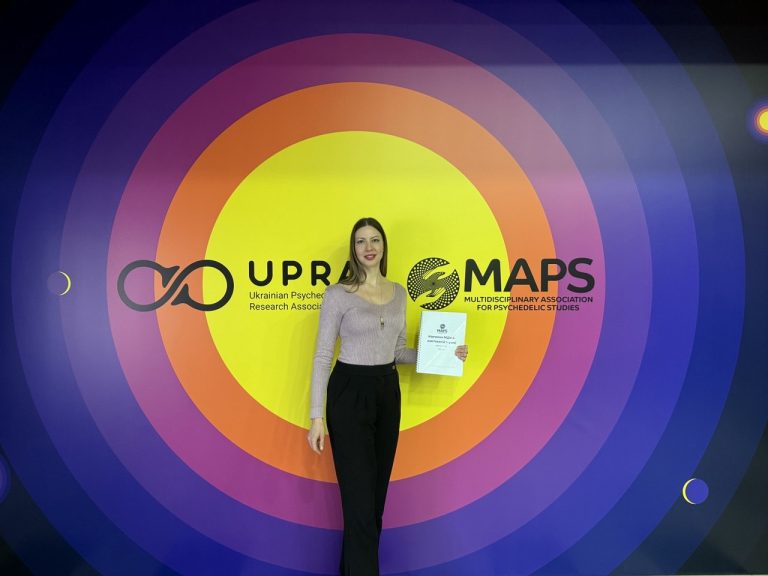
This case emerged during an international psychedelic-assisted therapy training facilitated by Multidisciplinary Association for Psychedelic Studies (MAPS), in collaboration with the Ukrainian Psychedelic Research Association (UPRA). The context was unusually complex: cross-cultural collaboration, active war conditions, elevated psychological load, and a clinical field where relational safety is foundational.
THE CHALLENGE
What appeared as a single incident revealed a deeper communications failure: ethical decisions were being shaped through informal interpretation rather than verified, traceable information. Under pressure, this left the institution without a reliable way to acknowledge harm precisely, align stakeholders, or communicate accountability without escalating risk.

THE HIDDEN PROBLEM
During the training, a participant made a dehumanizing remark, resulting in a rupture in psychological safety for another attendee. What intensified the situation was not the remark alone, but the response: a moment requiring ethical precision was met with generalities.
In the immediate aftermath, the situation was framed as a misunderstanding—differences in interpretation related to intent, tone, or language. However, closer examination revealed something more structural. Ethical decisions were being shaped through informal verbal relays, without direct verification or documented consent.
A written recommendation proposing a contained, non-escalatory acknowledgment of harm had been submitted through local channels. It was never substantively engaged.
Instead, decisions were informed by secondhand summaries, without verification from the original source. The response took the form of a generalized appeal to mutual respect—appropriate in tone, but insufficiently specific to restore stability or trust.
This was not a failure of care.
It was the absence of a formal verification loop—
a function rarely designed into ethics or communications protocols.

Left unaddressed, this kind of procedural ambiguity exposes institutions not only to internal destabilization, but to reputational drift, external misinterpretation, and long-term erosion of trust. Under pressure, ambiguity filled the space where structure was missing.
MY ROLE
I was engaged in a strategic communications and systems-design capacity to diagnose how ethical decisions were being made — and to redesign the conditions under which future decisions would occur.
The work required slowing decision-making without assigning fault, restoring clarity where speed had overtaken process, and ensuring that ethical response remained anchored in human impact. When systems lose that capacity under pressure, their ability to support repair is compromised—an especially consequential risk in trauma-exposed training environments.
WHAT I DID
Over six months, I led a full-cycle strategic communications process focused on strengthening ethical decision-making capacity across institutional boundaries.
This included:
- Information flow and verification mapping
Tracing how information moved through the system, where assumptions replaced confirmation, and how informal delegation altered ethical intent. - Narrative differentiation
Separating what was said, what was understood, and what was acted upon—without collapsing these into a single account. - Ethical systems diagnosis
Identifying gaps in shared definitions, escalation pathways, and verification responsibilities. - Ethical infrastructure design
Co-developing refinements to grievance, reporting, and rupture-response procedures—expanding protected categories and clarifying response thresholds without exposing individuals. - Bridging grassroots insight to institutional change
Supporting the development of context-specific ethical rules within the Ukrainian therapist community, grounded in participant feedback and later carried into institutional policy dialogue.
Throughout the process, one principle guided the work:
healing requires sustained recognition of people as fully human — and systems falter when that recognition is lost under pressure.
WHAT CHANGED
The outcome was not a single resolution, but a measurable reduction in future ethical exposure.
As a result:
- Ethical response protocols were strengthened to require direct verification in high-impact decisions.
- Protected categories were expanded to address previously unarticulated vulnerabilities.
- Rupture-response language was clarified to distinguish interpersonal disagreement from structural harm.
- New resources were developed to support collaborators operating across cultural and institutional boundaries.
Following this process, MAPS integrated several of these structural insights into its training protocols and collaborator resources, while UPRA advanced community-level ethical rules informed by participant feedback—together marking a shift from informal reliance to designed ethical response.
These changes were implemented in subsequent trainings, replacing dependence on intent with operational clarity.
The most significant shift was structural:
ethical decisions no longer depended on assumption, silence, or informal relays.
WHY THIS MATTERS
In high-visibility, high-trust fields, ethical ambiguity does not stay internal. It migrates outward — shaping legitimacy, reputation, and long-term viability.
This case illustrates a recurring institutional risk: when verification is absent, even well-intentioned systems can unintentionally reproduce harm. Not because individuals fail, but because infrastructure does.
Ethical readiness is not a moral posture.
It is an operational capacity.
- Click here to read the full case study on the MAPS website → “Ethics Under Fire: Turning Rupture Into Structure After Lviv’s MAPS Educational Program”

REFLECTION
This work was never about resolving a single rupture. It was about restoring the conditions that make ethical repair possible.
When institutions operate under pressure, clarity cannot be improvised. It must be designed, practiced, and confirmed in advance.
This is the kind of work I do when systems are too consequential to leave ethics to improvisation.
This work is most relevant for organizations operating at the intersection of care, ethics, and public trust—where clarity must hold under pressure.
If this reflects your context, you’re welcome to get in touch.